Tampilkan postingan dengan label news. Tampilkan semua postingan

Senin, 23 Januari 2012

Honda Plans to Roar Back in 2012

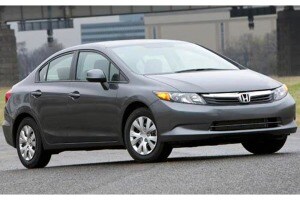
2012 Honda Civic
 New Accord Concept to be Unveiled at Detroit Auto Show

"We're baaack!" That's the message Honda executives want to convey to American consumers. Honda will be full-speed ahead in 2012 with new models, including revisions of its top three best sellers — the Honda Accord, Honda CR-V and Honda Civic.
"We want consumers to know we are back, and we are back in a big way," said John Mendel, Honda North America's executive vice president of auto sales, which include the Honda and Acura brands, in an interview with media and analysts in Detroit last month.
In 2011, Honda was battered more than any other automaker by the March 11 earthquake and tsunami in Japan that triggered worldwide production disruptions that led to vehicle shortages at U.S. dealerships. Mendel said dealers were operating with about 40 percent of their usual inventory during much of the year. But in 2012, Honda will be "full speed ahead." Production at Honda plants returned to 100 percent in November. The inventory pipeline is expected to be replenished to more "normal" levels by the end March. Honda's portfolio will include the recently revamped CR-V and Civic with a new Accord coming on in the fall. The trio of vehicles account for two-thirds of Honda's total U.S. sales.

Honda Plans to Roar Back in 2012

2012 Honda Civic
 New Accord Concept to be Unveiled at Detroit Auto Show

"We're baaack!" That's the message Honda executives want to convey to American consumers. Honda will be full-speed ahead in 2012 with new models, including revisions of its top three best sellers — the Honda Accord, Honda CR-V and Honda Civic.
"We want consumers to know we are back, and we are back in a big way," said John Mendel, Honda North America's executive vice president of auto sales, which include the Honda and Acura brands, in an interview with media and analysts in Detroit last month.
In 2011, Honda was battered more than any other automaker by the March 11 earthquake and tsunami in Japan that triggered worldwide production disruptions that led to vehicle shortages at U.S. dealerships. Mendel said dealers were operating with about 40 percent of their usual inventory during much of the year. But in 2012, Honda will be "full speed ahead." Production at Honda plants returned to 100 percent in November. The inventory pipeline is expected to be replenished to more "normal" levels by the end March. Honda's portfolio will include the recently revamped CR-V and Civic with a new Accord coming on in the fall. The trio of vehicles account for two-thirds of Honda's total U.S. sales.

Honda Plans to Roar Back in 2012

2012 Honda Civic
 New Accord Concept to be Unveiled at Detroit Auto Show

"We're baaack!" That's the message Honda executives want to convey to American consumers. Honda will be full-speed ahead in 2012 with new models, including revisions of its top three best sellers — the Honda Accord, Honda CR-V and Honda Civic.
"We want consumers to know we are back, and we are back in a big way," said John Mendel, Honda North America's executive vice president of auto sales, which include the Honda and Acura brands, in an interview with media and analysts in Detroit last month.
In 2011, Honda was battered more than any other automaker by the March 11 earthquake and tsunami in Japan that triggered worldwide production disruptions that led to vehicle shortages at U.S. dealerships. Mendel said dealers were operating with about 40 percent of their usual inventory during much of the year. But in 2012, Honda will be "full speed ahead." Production at Honda plants returned to 100 percent in November. The inventory pipeline is expected to be replenished to more "normal" levels by the end March. Honda's portfolio will include the recently revamped CR-V and Civic with a new Accord coming on in the fall. The trio of vehicles account for two-thirds of Honda's total U.S. sales.

Jumat, 06 Januari 2012

2012 Porsche Panamera Sedan


2011 Porsche Panamera Sedan ShownIntroduction

Whoever said, "You can't have it all" has never driven a 2012 Porsche Panamera. With most other cars, luxury and performance are either mutually exclusive or require compromises on each end of the spectrum. Not so with the Panamera, as the wizards at Porsche somehow blended the best of both worlds.
For 2012, the performance end of the scale gets pushed a bit farther with the introduction of a new Panamera Turbo S model that generates an impressive 550 horsepower (compared to the anything-but-standard Turbo's 500 hp). There's also a new Panamera Hybrid that promises V8 performance with V6 fuel economy.
These new models boost the Panamera lineup to seven models. And even if you choose one of the more basic V6 trims, we doubt you'll be disappointed. There's more than enough power for the average driver and plenty of the luxury trappings that continue into the higher reaches of the model line.
Drawbacks are few. The Panamera can only accommodate four passengers, though these passengers can be full-sized adults and will find a high level of comfort in any seat. Options are quite expensive, sending the price skyward in no time, but that's par for the course for cars in this segment, and isn't likely to deter this Porsche's wealthy demographic. The Panamera's unconventional styling will likely be the main issue for many shoppers.
In terms of competition, the BMW 7 Series, Jaguar XJ, Maserati Quattroporte and Mercedes-Benz S-Class are all worthy of consideration. Among this lofty group of luxury cars, there really isn't a loser in the bunch. The 2012 Porsche Panamera, however, is our pick for a car that delivers more of everything to everybody.

Body Styles, Trim Levels, and Options

The 2012 Porsche Panamera is a four-passenger, four-door hatchback offered in seven trim levels: base, 4, S Hybrid, S, 4S, Turbo and Turbo S.
The base rear-wheel-drive Panamera is powered by a V6 and includes 18-inch wheels, automatic xenon headlights, LED daytime running lights, a pop-up rear spoiler, adaptive suspension dampers, rear parking sensors, a sunroof, a power rear hatch and auto-dimming mirrors.
Standard features within the cabin include dual-zone automatic climate control, a tilt-and-telescoping steering column, eight-way power front seats, driver memory functions, a cooled glovebox, heated front seats, leather upholstery, a 60/40-split rear seatback and rear bucket seats. Also standard are a hard-drive-based navigation system and an 11-speaker sound system with a USB/iPod interface and an auxiliary audio jack. The Panamera 4 differs only in that it has all-wheel drive.
The Panamera S Hybrid goes without some of the features listed above, notably the xenon headlights and parking sensors. The automatic climate control is replaced by conventional air-conditioning, but Bluetooth is included.
The V8-powered Panamera S and all-wheel-drive 4S include all of the features found in the non-hybrid V6 models, plus adaptive headlights, additional interior lighting, driver-seat memory and shift paddles.
The Panamera Turbo and Turbo S add a turbocharged V8, 19-inch wheels, additional rear spoiler articulation, an adaptive air suspension with load-leveling and adjustable ride height, front parking sensors, a keyless ignition/entry, 14-way power front seats and adjustable lumbar support, expanded driver memory functions, a power-adjustable steering column, heated rear seats, a full leather interior, a microfiber suede headliner and a 14-speaker Bose surround-sound audio system.
In typical Porsche tradition, a very lengthy and expensive list of options allows buyers to easily customize the cars. For example, other than their engine, all of the Turbo models' extra features are available on the S and 4S.
Other options include ceramic-composite brakes, variable-assist power steering, Porsche Dynamic Chassis Control (adaptive antiroll bars and a limited-slip rear differential), 20-inch wheels, a rear windshield wiper, ventilated front and rear seats, eight-way power rear seats (switches seat-folding to 40/20/40), adaptive sport front seats that include adjustable side bolsters, "ruffled" leather upholstery, a heated steering wheel, four-zone climate control, rear sunshades, rear ambient lighting, a rear-seat refrigerator, Bluetooth, a rearview camera, voice control, a rear-seat entertainment system, satellite radio, a six-disc CD/DVD changer and a 16-speaker Burmester surround-sound audio system.
The Sport Chrono Package Plus adds analog and digital stopwatches and adjustable engine and suspension settings. The Sport Design package dresses up the Panamera's exterior with a special front fascia with wider intake grilles and side skirts. There are also countless ways to customize practically every interior surface with different shades of leather, wood, metal, carbon fiber and paint.

Powertrains and Performance

The 2012 Porsche Panamera and Panamera 4 are powered by a front-mounted 3.6-liter V6 that produces 300 horsepower and 295 pound-feet of torque. The Porsche Panamera S and 4S receive a 4.8-liter V8 good for 400 hp and 369 lb-ft of torque. The Panamera Turbo gets a twin-turbocharged version of the same V8 for a grand total of 500 hp and 516 lb-ft of torque. Adding the optional Sport Chrono Turbo package temporarily increases torque to 568 lb-ft with a turbo overboost. The new Turbo S dials output up to 550 hp and 553 lb-ft (590 lb-ft with overboost).
Every gasoline-only Panamera is equipped with a seven-speed dual-clutch automated manual transmission. The Panamera and Panamera S offer rear-wheel drive, while the Panamera 4, 4S and Turbo are equipped with all-wheel drive.
The Panamera S Hybrid receives a supercharged 3.0-liter V6 that is paired with a 35kW electric motor for a combined maximum output of 380 hp and 428 lb-ft of torque. The only available transmission is an eight-speed automatic with manual shift control that sends power to the rear wheels.
In recent testing by Edmunds, the base Panamera V6 accelerated from zero to 60 mph in 5.8 seconds. The V8-powered Panamera 4S impressed us with a 4.6-second run. The Panamera Turbo and Turbo S left us awestruck, turning in identical 3.7-second blasts. The Panamera S Hybrid is estimated by Porsche to make the run in 5.7 seconds.
Fuel economy is likely not a primary concern to buyers in this market segment, but one notable item in the Panamera's list of features is an auto start/stop feature (something normally associated only with hybrid vehicles) that reduces fuel consumption by shutting off the engine whenever the car comes to a stop and then restarting it automatically when you're ready to go again.
The EPA estimates fuel consumption at 18 mpg city/27 mpg highway and 21 mpg combined for the base Panamera, while the Panamera 4 makes 18/26/21 mpg. Maximum efficiency comes from the Hybrid, which posts an impressive 22/30/25 mpg.
The V8-powered Panamera S and 4S are both rated at 16/24/19 mpg, while the Panamera Turbo models achieve only 15/23/18 mpg.

Safety

Every 2012 Porsche Panamera comes standard with antilock brakes, stability and traction control, front and rear side airbags, side curtain airbags and front knee airbags. Ceramic-composite brakes and a rearview camera are optional. With the standard brakes, both the Panamera 4S and Turbo models stopped from 60 mph in incredibly short distances: 109 feet and 112 feet, respectively.

Interior Design and Special Features

From the driver seat, there's no mistaking the Panamera's interior for anything but a Porsche, because styling cues from the Porsche 911 echo throughout the cabin. The tachometer is centered in the instrument cluster and flanked by the speedometer, a multifunction display and supporting gauges.
The Panamera lacks a centralized control system like BMW's iDrive, and as a result, there are more than 80 buttons and knobs littering the cockpit. Fortunately, these buttons are logically grouped and placed, and after time, operation becomes intuitive. Some might even find the multitude of controls preferable to shuffling through on-screen menus.
All four seats are similar in appearance and comfort. These well-formed seats provide excellent levels of support when cornering as well as plenty of comfort during long-distance touring. The rear quarters afford enough room for even taller adults, and the seats can be fitted with options to make them power-adjustable, heated and cooled. The hatchback-style trunk can hold an impressive 15.7 cubic feet (11.8 with the Hybrid) and 44.6 cubes with the rear seats folded flat (the Hybrid S drops to 40.7 cubes). The hatch opening is a bit narrow, though, and the cargo bed is high, complicating the loading of bulkier items.

Driving Impressions

The 2012 Porsche Panamera is an accomplished, luxurious grand touring car as well as an engaging, highly capable high-performance car. Drivers can select from several driving modes to fit their preferences. In Normal mode, the Panamera feels as soft and leisurely as any European flagship sedan. Engaging full Sport mode can sharpen nearly every aspect of the driving dynamics, including throttle response, suspension firmness and ride height. From a sporting standpoint, the Hybrid is the least engaging, though it counters with excellent fuel economy.
The V8-powered Panamera is capable of incredible performance. Steering is precise and handling is comparable to that of much smaller sports cars. Power can be served up with muscle-car wallops or in measured increments. The PDK transmission fires off gearchanges with urgency when pedaling the accelerator hard, or with fluid transitions when cruising down the highway. Yes, the Porsche Panamera truly does deliver the best of both worlds: sports car and sedan.
2012 Porsche Panamera Sedan


2011 Porsche Panamera Sedan ShownIntroduction

Whoever said, "You can't have it all" has never driven a 2012 Porsche Panamera. With most other cars, luxury and performance are either mutually exclusive or require compromises on each end of the spectrum. Not so with the Panamera, as the wizards at Porsche somehow blended the best of both worlds.
For 2012, the performance end of the scale gets pushed a bit farther with the introduction of a new Panamera Turbo S model that generates an impressive 550 horsepower (compared to the anything-but-standard Turbo's 500 hp). There's also a new Panamera Hybrid that promises V8 performance with V6 fuel economy.
These new models boost the Panamera lineup to seven models. And even if you choose one of the more basic V6 trims, we doubt you'll be disappointed. There's more than enough power for the average driver and plenty of the luxury trappings that continue into the higher reaches of the model line.
Drawbacks are few. The Panamera can only accommodate four passengers, though these passengers can be full-sized adults and will find a high level of comfort in any seat. Options are quite expensive, sending the price skyward in no time, but that's par for the course for cars in this segment, and isn't likely to deter this Porsche's wealthy demographic. The Panamera's unconventional styling will likely be the main issue for many shoppers.
In terms of competition, the BMW 7 Series, Jaguar XJ, Maserati Quattroporte and Mercedes-Benz S-Class are all worthy of consideration. Among this lofty group of luxury cars, there really isn't a loser in the bunch. The 2012 Porsche Panamera, however, is our pick for a car that delivers more of everything to everybody.

Body Styles, Trim Levels, and Options

The 2012 Porsche Panamera is a four-passenger, four-door hatchback offered in seven trim levels: base, 4, S Hybrid, S, 4S, Turbo and Turbo S.
The base rear-wheel-drive Panamera is powered by a V6 and includes 18-inch wheels, automatic xenon headlights, LED daytime running lights, a pop-up rear spoiler, adaptive suspension dampers, rear parking sensors, a sunroof, a power rear hatch and auto-dimming mirrors.
Standard features within the cabin include dual-zone automatic climate control, a tilt-and-telescoping steering column, eight-way power front seats, driver memory functions, a cooled glovebox, heated front seats, leather upholstery, a 60/40-split rear seatback and rear bucket seats. Also standard are a hard-drive-based navigation system and an 11-speaker sound system with a USB/iPod interface and an auxiliary audio jack. The Panamera 4 differs only in that it has all-wheel drive.
The Panamera S Hybrid goes without some of the features listed above, notably the xenon headlights and parking sensors. The automatic climate control is replaced by conventional air-conditioning, but Bluetooth is included.
The V8-powered Panamera S and all-wheel-drive 4S include all of the features found in the non-hybrid V6 models, plus adaptive headlights, additional interior lighting, driver-seat memory and shift paddles.
The Panamera Turbo and Turbo S add a turbocharged V8, 19-inch wheels, additional rear spoiler articulation, an adaptive air suspension with load-leveling and adjustable ride height, front parking sensors, a keyless ignition/entry, 14-way power front seats and adjustable lumbar support, expanded driver memory functions, a power-adjustable steering column, heated rear seats, a full leather interior, a microfiber suede headliner and a 14-speaker Bose surround-sound audio system.
In typical Porsche tradition, a very lengthy and expensive list of options allows buyers to easily customize the cars. For example, other than their engine, all of the Turbo models' extra features are available on the S and 4S.
Other options include ceramic-composite brakes, variable-assist power steering, Porsche Dynamic Chassis Control (adaptive antiroll bars and a limited-slip rear differential), 20-inch wheels, a rear windshield wiper, ventilated front and rear seats, eight-way power rear seats (switches seat-folding to 40/20/40), adaptive sport front seats that include adjustable side bolsters, "ruffled" leather upholstery, a heated steering wheel, four-zone climate control, rear sunshades, rear ambient lighting, a rear-seat refrigerator, Bluetooth, a rearview camera, voice control, a rear-seat entertainment system, satellite radio, a six-disc CD/DVD changer and a 16-speaker Burmester surround-sound audio system.
The Sport Chrono Package Plus adds analog and digital stopwatches and adjustable engine and suspension settings. The Sport Design package dresses up the Panamera's exterior with a special front fascia with wider intake grilles and side skirts. There are also countless ways to customize practically every interior surface with different shades of leather, wood, metal, carbon fiber and paint.

Powertrains and Performance

The 2012 Porsche Panamera and Panamera 4 are powered by a front-mounted 3.6-liter V6 that produces 300 horsepower and 295 pound-feet of torque. The Porsche Panamera S and 4S receive a 4.8-liter V8 good for 400 hp and 369 lb-ft of torque. The Panamera Turbo gets a twin-turbocharged version of the same V8 for a grand total of 500 hp and 516 lb-ft of torque. Adding the optional Sport Chrono Turbo package temporarily increases torque to 568 lb-ft with a turbo overboost. The new Turbo S dials output up to 550 hp and 553 lb-ft (590 lb-ft with overboost).
Every gasoline-only Panamera is equipped with a seven-speed dual-clutch automated manual transmission. The Panamera and Panamera S offer rear-wheel drive, while the Panamera 4, 4S and Turbo are equipped with all-wheel drive.
The Panamera S Hybrid receives a supercharged 3.0-liter V6 that is paired with a 35kW electric motor for a combined maximum output of 380 hp and 428 lb-ft of torque. The only available transmission is an eight-speed automatic with manual shift control that sends power to the rear wheels.
In recent testing by Edmunds, the base Panamera V6 accelerated from zero to 60 mph in 5.8 seconds. The V8-powered Panamera 4S impressed us with a 4.6-second run. The Panamera Turbo and Turbo S left us awestruck, turning in identical 3.7-second blasts. The Panamera S Hybrid is estimated by Porsche to make the run in 5.7 seconds.
Fuel economy is likely not a primary concern to buyers in this market segment, but one notable item in the Panamera's list of features is an auto start/stop feature (something normally associated only with hybrid vehicles) that reduces fuel consumption by shutting off the engine whenever the car comes to a stop and then restarting it automatically when you're ready to go again.
The EPA estimates fuel consumption at 18 mpg city/27 mpg highway and 21 mpg combined for the base Panamera, while the Panamera 4 makes 18/26/21 mpg. Maximum efficiency comes from the Hybrid, which posts an impressive 22/30/25 mpg.
The V8-powered Panamera S and 4S are both rated at 16/24/19 mpg, while the Panamera Turbo models achieve only 15/23/18 mpg.

Safety

Every 2012 Porsche Panamera comes standard with antilock brakes, stability and traction control, front and rear side airbags, side curtain airbags and front knee airbags. Ceramic-composite brakes and a rearview camera are optional. With the standard brakes, both the Panamera 4S and Turbo models stopped from 60 mph in incredibly short distances: 109 feet and 112 feet, respectively.

Interior Design and Special Features

From the driver seat, there's no mistaking the Panamera's interior for anything but a Porsche, because styling cues from the Porsche 911 echo throughout the cabin. The tachometer is centered in the instrument cluster and flanked by the speedometer, a multifunction display and supporting gauges.
The Panamera lacks a centralized control system like BMW's iDrive, and as a result, there are more than 80 buttons and knobs littering the cockpit. Fortunately, these buttons are logically grouped and placed, and after time, operation becomes intuitive. Some might even find the multitude of controls preferable to shuffling through on-screen menus.
All four seats are similar in appearance and comfort. These well-formed seats provide excellent levels of support when cornering as well as plenty of comfort during long-distance touring. The rear quarters afford enough room for even taller adults, and the seats can be fitted with options to make them power-adjustable, heated and cooled. The hatchback-style trunk can hold an impressive 15.7 cubic feet (11.8 with the Hybrid) and 44.6 cubes with the rear seats folded flat (the Hybrid S drops to 40.7 cubes). The hatch opening is a bit narrow, though, and the cargo bed is high, complicating the loading of bulkier items.

Driving Impressions

The 2012 Porsche Panamera is an accomplished, luxurious grand touring car as well as an engaging, highly capable high-performance car. Drivers can select from several driving modes to fit their preferences. In Normal mode, the Panamera feels as soft and leisurely as any European flagship sedan. Engaging full Sport mode can sharpen nearly every aspect of the driving dynamics, including throttle response, suspension firmness and ride height. From a sporting standpoint, the Hybrid is the least engaging, though it counters with excellent fuel economy.
The V8-powered Panamera is capable of incredible performance. Steering is precise and handling is comparable to that of much smaller sports cars. Power can be served up with muscle-car wallops or in measured increments. The PDK transmission fires off gearchanges with urgency when pedaling the accelerator hard, or with fluid transitions when cruising down the highway. Yes, the Porsche Panamera truly does deliver the best of both worlds: sports car and sedan.

2012 Porsche Panamera Sedan


2011 Porsche Panamera Sedan ShownIntroduction

Whoever said, "You can't have it all" has never driven a 2012 Porsche Panamera. With most other cars, luxury and performance are either mutually exclusive or require compromises on each end of the spectrum. Not so with the Panamera, as the wizards at Porsche somehow blended the best of both worlds.
For 2012, the performance end of the scale gets pushed a bit farther with the introduction of a new Panamera Turbo S model that generates an impressive 550 horsepower (compared to the anything-but-standard Turbo's 500 hp). There's also a new Panamera Hybrid that promises V8 performance with V6 fuel economy.
These new models boost the Panamera lineup to seven models. And even if you choose one of the more basic V6 trims, we doubt you'll be disappointed. There's more than enough power for the average driver and plenty of the luxury trappings that continue into the higher reaches of the model line.
Drawbacks are few. The Panamera can only accommodate four passengers, though these passengers can be full-sized adults and will find a high level of comfort in any seat. Options are quite expensive, sending the price skyward in no time, but that's par for the course for cars in this segment, and isn't likely to deter this Porsche's wealthy demographic. The Panamera's unconventional styling will likely be the main issue for many shoppers.
In terms of competition, the BMW 7 Series, Jaguar XJ, Maserati Quattroporte and Mercedes-Benz S-Class are all worthy of consideration. Among this lofty group of luxury cars, there really isn't a loser in the bunch. The 2012 Porsche Panamera, however, is our pick for a car that delivers more of everything to everybody.

Body Styles, Trim Levels, and Options

The 2012 Porsche Panamera is a four-passenger, four-door hatchback offered in seven trim levels: base, 4, S Hybrid, S, 4S, Turbo and Turbo S.
The base rear-wheel-drive Panamera is powered by a V6 and includes 18-inch wheels, automatic xenon headlights, LED daytime running lights, a pop-up rear spoiler, adaptive suspension dampers, rear parking sensors, a sunroof, a power rear hatch and auto-dimming mirrors.
Standard features within the cabin include dual-zone automatic climate control, a tilt-and-telescoping steering column, eight-way power front seats, driver memory functions, a cooled glovebox, heated front seats, leather upholstery, a 60/40-split rear seatback and rear bucket seats. Also standard are a hard-drive-based navigation system and an 11-speaker sound system with a USB/iPod interface and an auxiliary audio jack. The Panamera 4 differs only in that it has all-wheel drive.
The Panamera S Hybrid goes without some of the features listed above, notably the xenon headlights and parking sensors. The automatic climate control is replaced by conventional air-conditioning, but Bluetooth is included.
The V8-powered Panamera S and all-wheel-drive 4S include all of the features found in the non-hybrid V6 models, plus adaptive headlights, additional interior lighting, driver-seat memory and shift paddles.
The Panamera Turbo and Turbo S add a turbocharged V8, 19-inch wheels, additional rear spoiler articulation, an adaptive air suspension with load-leveling and adjustable ride height, front parking sensors, a keyless ignition/entry, 14-way power front seats and adjustable lumbar support, expanded driver memory functions, a power-adjustable steering column, heated rear seats, a full leather interior, a microfiber suede headliner and a 14-speaker Bose surround-sound audio system.
In typical Porsche tradition, a very lengthy and expensive list of options allows buyers to easily customize the cars. For example, other than their engine, all of the Turbo models' extra features are available on the S and 4S.
Other options include ceramic-composite brakes, variable-assist power steering, Porsche Dynamic Chassis Control (adaptive antiroll bars and a limited-slip rear differential), 20-inch wheels, a rear windshield wiper, ventilated front and rear seats, eight-way power rear seats (switches seat-folding to 40/20/40), adaptive sport front seats that include adjustable side bolsters, "ruffled" leather upholstery, a heated steering wheel, four-zone climate control, rear sunshades, rear ambient lighting, a rear-seat refrigerator, Bluetooth, a rearview camera, voice control, a rear-seat entertainment system, satellite radio, a six-disc CD/DVD changer and a 16-speaker Burmester surround-sound audio system.
The Sport Chrono Package Plus adds analog and digital stopwatches and adjustable engine and suspension settings. The Sport Design package dresses up the Panamera's exterior with a special front fascia with wider intake grilles and side skirts. There are also countless ways to customize practically every interior surface with different shades of leather, wood, metal, carbon fiber and paint.

Powertrains and Performance

The 2012 Porsche Panamera and Panamera 4 are powered by a front-mounted 3.6-liter V6 that produces 300 horsepower and 295 pound-feet of torque. The Porsche Panamera S and 4S receive a 4.8-liter V8 good for 400 hp and 369 lb-ft of torque. The Panamera Turbo gets a twin-turbocharged version of the same V8 for a grand total of 500 hp and 516 lb-ft of torque. Adding the optional Sport Chrono Turbo package temporarily increases torque to 568 lb-ft with a turbo overboost. The new Turbo S dials output up to 550 hp and 553 lb-ft (590 lb-ft with overboost).
Every gasoline-only Panamera is equipped with a seven-speed dual-clutch automated manual transmission. The Panamera and Panamera S offer rear-wheel drive, while the Panamera 4, 4S and Turbo are equipped with all-wheel drive.
The Panamera S Hybrid receives a supercharged 3.0-liter V6 that is paired with a 35kW electric motor for a combined maximum output of 380 hp and 428 lb-ft of torque. The only available transmission is an eight-speed automatic with manual shift control that sends power to the rear wheels.
In recent testing by Edmunds, the base Panamera V6 accelerated from zero to 60 mph in 5.8 seconds. The V8-powered Panamera 4S impressed us with a 4.6-second run. The Panamera Turbo and Turbo S left us awestruck, turning in identical 3.7-second blasts. The Panamera S Hybrid is estimated by Porsche to make the run in 5.7 seconds.
Fuel economy is likely not a primary concern to buyers in this market segment, but one notable item in the Panamera's list of features is an auto start/stop feature (something normally associated only with hybrid vehicles) that reduces fuel consumption by shutting off the engine whenever the car comes to a stop and then restarting it automatically when you're ready to go again.
The EPA estimates fuel consumption at 18 mpg city/27 mpg highway and 21 mpg combined for the base Panamera, while the Panamera 4 makes 18/26/21 mpg. Maximum efficiency comes from the Hybrid, which posts an impressive 22/30/25 mpg.
The V8-powered Panamera S and 4S are both rated at 16/24/19 mpg, while the Panamera Turbo models achieve only 15/23/18 mpg.

Safety

Every 2012 Porsche Panamera comes standard with antilock brakes, stability and traction control, front and rear side airbags, side curtain airbags and front knee airbags. Ceramic-composite brakes and a rearview camera are optional. With the standard brakes, both the Panamera 4S and Turbo models stopped from 60 mph in incredibly short distances: 109 feet and 112 feet, respectively.

Interior Design and Special Features

From the driver seat, there's no mistaking the Panamera's interior for anything but a Porsche, because styling cues from the Porsche 911 echo throughout the cabin. The tachometer is centered in the instrument cluster and flanked by the speedometer, a multifunction display and supporting gauges.
The Panamera lacks a centralized control system like BMW's iDrive, and as a result, there are more than 80 buttons and knobs littering the cockpit. Fortunately, these buttons are logically grouped and placed, and after time, operation becomes intuitive. Some might even find the multitude of controls preferable to shuffling through on-screen menus.
All four seats are similar in appearance and comfort. These well-formed seats provide excellent levels of support when cornering as well as plenty of comfort during long-distance touring. The rear quarters afford enough room for even taller adults, and the seats can be fitted with options to make them power-adjustable, heated and cooled. The hatchback-style trunk can hold an impressive 15.7 cubic feet (11.8 with the Hybrid) and 44.6 cubes with the rear seats folded flat (the Hybrid S drops to 40.7 cubes). The hatch opening is a bit narrow, though, and the cargo bed is high, complicating the loading of bulkier items.

Driving Impressions

The 2012 Porsche Panamera is an accomplished, luxurious grand touring car as well as an engaging, highly capable high-performance car. Drivers can select from several driving modes to fit their preferences. In Normal mode, the Panamera feels as soft and leisurely as any European flagship sedan. Engaging full Sport mode can sharpen nearly every aspect of the driving dynamics, including throttle response, suspension firmness and ride height. From a sporting standpoint, the Hybrid is the least engaging, though it counters with excellent fuel economy.
The V8-powered Panamera is capable of incredible performance. Steering is precise and handling is comparable to that of much smaller sports cars. Power can be served up with muscle-car wallops or in measured increments. The PDK transmission fires off gearchanges with urgency when pedaling the accelerator hard, or with fluid transitions when cruising down the highway. Yes, the Porsche Panamera truly does deliver the best of both worlds: sports car and sedan.

Rabu, 21 Desember 2011

The 2012 Ford Focus electric is expected to get at least 100 mpg-e.


DETROIT -- Ford Motor Co. has fired the latest shots in the green-car war, claiming that the 2012 Ford Focus electric vehicle will be the first vehicle to break the 100-mpg-e barrier.
Ford took aim at its rivals, pricing the Focus electric at $39,995, including shipping. Ford has begun taking orders for the Focus electric and has begun building the cars at its Michigan Assembly Plant in Wayne, Mich.
The Nissan Leaf is priced at $36,050, while the Chevrolet Volt is priced at $39,995, including delivery fees.
The Focus EV, Volt and Leaf all qualify for a federal income tax credit of up to $7,500.
Ford officials said today that the Focus plug-in electric can reach a full electric charge in a little more than three hours with a special 240-volt charging system. It is equipped with a lithium ion battery pack.
The mpg-e figure is a year-old measure by the U.S. Environmental Protection Agency that accounts for and calculates the range of technologies being incorporated into electric cars, which use powertrains significantly different from the traditional internal-combustion engine. It stands for miles per gallon-equivalent.

By comparison, the Nissan Leaf is estimated to get 100 mpg-e, and the Chevrolet Volt gets 94 mpg-e when driven in all-electric mode. The Volt can travel about 35 to 40 miles on electricity before a gasoline engine kicks on to extend range. When that happens, the car's fuel economy is 37 mpg under gasoline power.
Consumers in New York, New Jersey and California have been able to order the Focus electric since November, and that will expand to 15 launch markets in 2012.
Meanwhile, Ford also said its future electric crossover, the C-Max, is expected to get better mpg-e ratings than competitors, though that figure was not specified. The C-Max employs European styling with room for five passengers to bridge the gap between cars and small crossovers.
It will come in two versions: a plug-in hybrid that will compete against offerings such as the Prius plug-in, and the C-Max Energi is all-electric, making it more of an entry against the Leaf.
A year ago, Ford said it would offer a gasoline-powered C-Max but reversed course after deciding that the people hauler would be better pitched as a pure green car.
"We can change when market conditions [shift]," Ford sales chief Jim Farley said at an event this year, where the new strategy was detailed. "Ford now offers a dedicated body style."
The move comes as Ford and other automakers scramble to reach tougher CAFE standards set to take effect in coming model years, placing an increased emphasis on hybrids, pure-electric and other methods of alternative propulsion.

The 2012 Ford Focus electric is expected to get at least 100 mpg-e.


DETROIT -- Ford Motor Co. has fired the latest shots in the green-car war, claiming that the 2012 Ford Focus electric vehicle will be the first vehicle to break the 100-mpg-e barrier.
Ford took aim at its rivals, pricing the Focus electric at $39,995, including shipping. Ford has begun taking orders for the Focus electric and has begun building the cars at its Michigan Assembly Plant in Wayne, Mich.
The Nissan Leaf is priced at $36,050, while the Chevrolet Volt is priced at $39,995, including delivery fees.
The Focus EV, Volt and Leaf all qualify for a federal income tax credit of up to $7,500.
Ford officials said today that the Focus plug-in electric can reach a full electric charge in a little more than three hours with a special 240-volt charging system. It is equipped with a lithium ion battery pack.
The mpg-e figure is a year-old measure by the U.S. Environmental Protection Agency that accounts for and calculates the range of technologies being incorporated into electric cars, which use powertrains significantly different from the traditional internal-combustion engine. It stands for miles per gallon-equivalent.

By comparison, the Nissan Leaf is estimated to get 100 mpg-e, and the Chevrolet Volt gets 94 mpg-e when driven in all-electric mode. The Volt can travel about 35 to 40 miles on electricity before a gasoline engine kicks on to extend range. When that happens, the car's fuel economy is 37 mpg under gasoline power.
Consumers in New York, New Jersey and California have been able to order the Focus electric since November, and that will expand to 15 launch markets in 2012.
Meanwhile, Ford also said its future electric crossover, the C-Max, is expected to get better mpg-e ratings than competitors, though that figure was not specified. The C-Max employs European styling with room for five passengers to bridge the gap between cars and small crossovers.
It will come in two versions: a plug-in hybrid that will compete against offerings such as the Prius plug-in, and the C-Max Energi is all-electric, making it more of an entry against the Leaf.
A year ago, Ford said it would offer a gasoline-powered C-Max but reversed course after deciding that the people hauler would be better pitched as a pure green car.
"We can change when market conditions [shift]," Ford sales chief Jim Farley said at an event this year, where the new strategy was detailed. "Ford now offers a dedicated body style."
The move comes as Ford and other automakers scramble to reach tougher CAFE standards set to take effect in coming model years, placing an increased emphasis on hybrids, pure-electric and other methods of alternative propulsion.

The 2012 Ford Focus electric is expected to get at least 100 mpg-e.


DETROIT -- Ford Motor Co. has fired the latest shots in the green-car war, claiming that the 2012 Ford Focus electric vehicle will be the first vehicle to break the 100-mpg-e barrier.
Ford took aim at its rivals, pricing the Focus electric at $39,995, including shipping. Ford has begun taking orders for the Focus electric and has begun building the cars at its Michigan Assembly Plant in Wayne, Mich.
The Nissan Leaf is priced at $36,050, while the Chevrolet Volt is priced at $39,995, including delivery fees.
The Focus EV, Volt and Leaf all qualify for a federal income tax credit of up to $7,500.
Ford officials said today that the Focus plug-in electric can reach a full electric charge in a little more than three hours with a special 240-volt charging system. It is equipped with a lithium ion battery pack.
The mpg-e figure is a year-old measure by the U.S. Environmental Protection Agency that accounts for and calculates the range of technologies being incorporated into electric cars, which use powertrains significantly different from the traditional internal-combustion engine. It stands for miles per gallon-equivalent.

By comparison, the Nissan Leaf is estimated to get 100 mpg-e, and the Chevrolet Volt gets 94 mpg-e when driven in all-electric mode. The Volt can travel about 35 to 40 miles on electricity before a gasoline engine kicks on to extend range. When that happens, the car's fuel economy is 37 mpg under gasoline power.
Consumers in New York, New Jersey and California have been able to order the Focus electric since November, and that will expand to 15 launch markets in 2012.
Meanwhile, Ford also said its future electric crossover, the C-Max, is expected to get better mpg-e ratings than competitors, though that figure was not specified. The C-Max employs European styling with room for five passengers to bridge the gap between cars and small crossovers.
It will come in two versions: a plug-in hybrid that will compete against offerings such as the Prius plug-in, and the C-Max Energi is all-electric, making it more of an entry against the Leaf.
A year ago, Ford said it would offer a gasoline-powered C-Max but reversed course after deciding that the people hauler would be better pitched as a pure green car.
"We can change when market conditions [shift]," Ford sales chief Jim Farley said at an event this year, where the new strategy was detailed. "Ford now offers a dedicated body style."
The move comes as Ford and other automakers scramble to reach tougher CAFE standards set to take effect in coming model years, placing an increased emphasis on hybrids, pure-electric and other methods of alternative propulsion.

Chrysler readies Detroit plant for new Viper; output is a year off


DETROIT -- Chrysler Group will resume production of the Viper, its high-performance sports car, late next year after a two-year hiatus.
The redesigned 2013 model will be rebadged as the SRT Viper, shedding its former Dodge name. Ralph Gilles, former CEO of the Dodge brand, now heads Chrysler's SRT high-performance unit. The car is scheduled to be introduced at the New York auto show in April.
Chrysler announced last week that the first of 150 hourly and salaried employees had returned to reopen the Conner Avenue Assembly plant in Detroit, where the Viper will again be built. Each Viper is built by small teams of workers at individual stations, not on an assembly line.
Chrysler said few modifications to the plant are needed to restart production. Workers will be trained to implement parent Fiat's manufacturing system, which Chrysler plants are adopting.
The plant was idled in July 2010 when production of the last version of the Dodge Viper ended. Vipers were assembled at the Conner Avenue plant from 1995 to 2010 at a rate of about 12 per day. A total of 22,070 Vipers were produced there over the 15-year run.
Details about the 2013 SRT Viper, such as the engine, haven't been released. The old Viper had a V-10.
The new Viper is expected to incorporate technology from Fiat, and dealers have said a prototype shown last year had Italian styling cues. One Chrysler source said the car is built on a newly developed platform.
The Viper is expected to be run in international GT racing, and Chrysler has signed a deal with Riley Technologies to analyze the potential.
www.autonews.com

Chrysler readies Detroit plant for new Viper; output is a year off


DETROIT -- Chrysler Group will resume production of the Viper, its high-performance sports car, late next year after a two-year hiatus.
The redesigned 2013 model will be rebadged as the SRT Viper, shedding its former Dodge name. Ralph Gilles, former CEO of the Dodge brand, now heads Chrysler's SRT high-performance unit. The car is scheduled to be introduced at the New York auto show in April.
Chrysler announced last week that the first of 150 hourly and salaried employees had returned to reopen the Conner Avenue Assembly plant in Detroit, where the Viper will again be built. Each Viper is built by small teams of workers at individual stations, not on an assembly line.
Chrysler said few modifications to the plant are needed to restart production. Workers will be trained to implement parent Fiat's manufacturing system, which Chrysler plants are adopting.
The plant was idled in July 2010 when production of the last version of the Dodge Viper ended. Vipers were assembled at the Conner Avenue plant from 1995 to 2010 at a rate of about 12 per day. A total of 22,070 Vipers were produced there over the 15-year run.
Details about the 2013 SRT Viper, such as the engine, haven't been released. The old Viper had a V-10.
The new Viper is expected to incorporate technology from Fiat, and dealers have said a prototype shown last year had Italian styling cues. One Chrysler source said the car is built on a newly developed platform.
The Viper is expected to be run in international GT racing, and Chrysler has signed a deal with Riley Technologies to analyze the potential.
www.autonews.com

Chrysler readies Detroit plant for new Viper; output is a year off


DETROIT -- Chrysler Group will resume production of the Viper, its high-performance sports car, late next year after a two-year hiatus.
The redesigned 2013 model will be rebadged as the SRT Viper, shedding its former Dodge name. Ralph Gilles, former CEO of the Dodge brand, now heads Chrysler's SRT high-performance unit. The car is scheduled to be introduced at the New York auto show in April.
Chrysler announced last week that the first of 150 hourly and salaried employees had returned to reopen the Conner Avenue Assembly plant in Detroit, where the Viper will again be built. Each Viper is built by small teams of workers at individual stations, not on an assembly line.
Chrysler said few modifications to the plant are needed to restart production. Workers will be trained to implement parent Fiat's manufacturing system, which Chrysler plants are adopting.
The plant was idled in July 2010 when production of the last version of the Dodge Viper ended. Vipers were assembled at the Conner Avenue plant from 1995 to 2010 at a rate of about 12 per day. A total of 22,070 Vipers were produced there over the 15-year run.
Details about the 2013 SRT Viper, such as the engine, haven't been released. The old Viper had a V-10.
The new Viper is expected to incorporate technology from Fiat, and dealers have said a prototype shown last year had Italian styling cues. One Chrysler source said the car is built on a newly developed platform.
The Viper is expected to be run in international GT racing, and Chrysler has signed a deal with Riley Technologies to analyze the potential.
www.autonews.com

Daimler postpones launch of electric Smart


Daimler's Smart subsidiary will start deliveries of an electric version of the ForTwo minicar in September 2012, which is months later than what the German automaker promised two months ago, Automotive News Europe has learned.
The electric ForTwo is the small-car brand's most important product launch for 2012.
A Daimler spokeswoman confirmed the change of plans.
"This involves a delay of just three months. Deliveries would have only begun in June anyway," she said.
The spokeswoman blamed the delay on the automaker's battery cell supplier, Li-Tec. Unspecified problems occurred in the manufacturing process as production was ramped up.
"There are no technical or quality problems with the batteries," the spokeswoman said. "But we don't want to lower our sights in safeguarding quality. That's why we're accepting a delay."
The third generation of the electric ForTwo will use batteries from a joint venture between Daimler and German supplier Evonic called Deutsche Accumotive.
Li-Tec is a separate joint venture between Evonic and Daimler that is the subsupplier of the battery cells.
In a press release from Sept. 13, 2011, Daimler said the third-generation electric Smart would be available in more than 30 worldwide markets starting in spring 2012.
The first electric Smart test fleet was launched in London in 2007. About 2,000 units of the second generation model, which got its battery from U.S. electric car maker Tesla, have been built since 2009.
Smart CEO Annette Winkler cited a "five-figure production volume" for the third-generation battery-powered Smart.


Daimler postpones launch of electric Smart


Daimler's Smart subsidiary will start deliveries of an electric version of the ForTwo minicar in September 2012, which is months later than what the German automaker promised two months ago, Automotive News Europe has learned.
The electric ForTwo is the small-car brand's most important product launch for 2012.
A Daimler spokeswoman confirmed the change of plans.
"This involves a delay of just three months. Deliveries would have only begun in June anyway," she said.
The spokeswoman blamed the delay on the automaker's battery cell supplier, Li-Tec. Unspecified problems occurred in the manufacturing process as production was ramped up.
"There are no technical or quality problems with the batteries," the spokeswoman said. "But we don't want to lower our sights in safeguarding quality. That's why we're accepting a delay."
The third generation of the electric ForTwo will use batteries from a joint venture between Daimler and German supplier Evonic called Deutsche Accumotive.
Li-Tec is a separate joint venture between Evonic and Daimler that is the subsupplier of the battery cells.
In a press release from Sept. 13, 2011, Daimler said the third-generation electric Smart would be available in more than 30 worldwide markets starting in spring 2012.
The first electric Smart test fleet was launched in London in 2007. About 2,000 units of the second generation model, which got its battery from U.S. electric car maker Tesla, have been built since 2009.
Smart CEO Annette Winkler cited a "five-figure production volume" for the third-generation battery-powered Smart.


Daimler postpones launch of electric Smart


Daimler's Smart subsidiary will start deliveries of an electric version of the ForTwo minicar in September 2012, which is months later than what the German automaker promised two months ago, Automotive News Europe has learned.
The electric ForTwo is the small-car brand's most important product launch for 2012.
A Daimler spokeswoman confirmed the change of plans.
"This involves a delay of just three months. Deliveries would have only begun in June anyway," she said.
The spokeswoman blamed the delay on the automaker's battery cell supplier, Li-Tec. Unspecified problems occurred in the manufacturing process as production was ramped up.
"There are no technical or quality problems with the batteries," the spokeswoman said. "But we don't want to lower our sights in safeguarding quality. That's why we're accepting a delay."
The third generation of the electric ForTwo will use batteries from a joint venture between Daimler and German supplier Evonic called Deutsche Accumotive.
Li-Tec is a separate joint venture between Evonic and Daimler that is the subsupplier of the battery cells.
In a press release from Sept. 13, 2011, Daimler said the third-generation electric Smart would be available in more than 30 worldwide markets starting in spring 2012.
The first electric Smart test fleet was launched in London in 2007. About 2,000 units of the second generation model, which got its battery from U.S. electric car maker Tesla, have been built since 2009.
Smart CEO Annette Winkler cited a "five-figure production volume" for the third-generation battery-powered Smart.


Senin, 19 Desember 2011

CX-5 will give Mazda a strong player in crossover race

LOS ANGELES -- While Ford and Honda duke it out for crossover supremacy, Mazda just wants a bigger piece of the action.
And it will likely get it when the 2013 CX-5 goes on sale in February.
Over the years, Honda’s CR-V has been the top-selling compact crossover in the United States. This year, because of production constraints after the March earthquake in Japan, the Escape is on top. Both Ford and Honda chose the Los Angeles Auto Show to showcase redesigns today.
The CX-5, meanwhile, is making its North American debut here.
Mazda is sending several messages with the CX-5, which will replace the Tribute and CX-7 in the United States.
First, this isn’t a rebadged Ford -- unlike the Tribute, which has been an Escape clone since 1999. The CX-5 vehicle platform, engine and transmission are all Mazda. And it has a genuine sporty ride, if my 100 miles on winding California highways this week are any indication.
Second, there’s a big jump in fuel economy. Though final numbers aren’t out, Mazda expects the CX-5 with an automatic transmission to get 26 mpg in the city and 32 mpg on the highway. That compares with to 18/24 mpg for the outgoing CX-7.
Third, this is the first application of Mazda’s Kodo design language, which Mazda describes as “soul of motion.” All future Mazda vehicles will share the styling cues. Mazda’s polarizing front end, derided as a “clown’s face” design, is gone.
Mazda sells about one CX-7/Tribute for every six Escapes peddled by Ford.
No one is expecting the CX-5 to knock the Escape and CR-V from their perches. While Mazda isn’t sharing sales projections, it can credibly say it has a worthy competitor in the mix.

CX-5 will give Mazda a strong player in crossover race

LOS ANGELES -- While Ford and Honda duke it out for crossover supremacy, Mazda just wants a bigger piece of the action.
And it will likely get it when the 2013 CX-5 goes on sale in February.
Over the years, Honda’s CR-V has been the top-selling compact crossover in the United States. This year, because of production constraints after the March earthquake in Japan, the Escape is on top. Both Ford and Honda chose the Los Angeles Auto Show to showcase redesigns today.
The CX-5, meanwhile, is making its North American debut here.
Mazda is sending several messages with the CX-5, which will replace the Tribute and CX-7 in the United States.
First, this isn’t a rebadged Ford -- unlike the Tribute, which has been an Escape clone since 1999. The CX-5 vehicle platform, engine and transmission are all Mazda. And it has a genuine sporty ride, if my 100 miles on winding California highways this week are any indication.
Second, there’s a big jump in fuel economy. Though final numbers aren’t out, Mazda expects the CX-5 with an automatic transmission to get 26 mpg in the city and 32 mpg on the highway. That compares with to 18/24 mpg for the outgoing CX-7.
Third, this is the first application of Mazda’s Kodo design language, which Mazda describes as “soul of motion.” All future Mazda vehicles will share the styling cues. Mazda’s polarizing front end, derided as a “clown’s face” design, is gone.
Mazda sells about one CX-7/Tribute for every six Escapes peddled by Ford.
No one is expecting the CX-5 to knock the Escape and CR-V from their perches. While Mazda isn’t sharing sales projections, it can credibly say it has a worthy competitor in the mix.

Next Viper will shed some rough edges

blogs
Today's Dodge Viper is essentially a street-legal race car. The next car is being engineered to attract a wider range of buyers.
LOS ANGELES -- Little by little we're getting a clearer picture of the next-generation Dodge Viper SRT10.
During a conversation Wednesday with Dodge boss Reid Bigland at the Los Angeles auto show, Bigland told me the redesigned Viper "will appeal to a broader segment of the market."
The car is expected to debut in 2012, but is not likely to appear at the Detroit auto show, he says.
Today's Viper is essentially a street-legal race car. The next car is being engineered to attract a wider range of buyers.
"It was a little crude in th ...
     Continue reading "Next Viper will shed some rough edges" »

Next Viper will shed some rough edges

blogs
Today's Dodge Viper is essentially a street-legal race car. The next car is being engineered to attract a wider range of buyers.
LOS ANGELES -- Little by little we're getting a clearer picture of the next-generation Dodge Viper SRT10.
During a conversation Wednesday with Dodge boss Reid Bigland at the Los Angeles auto show, Bigland told me the redesigned Viper "will appeal to a broader segment of the market."
The car is expected to debut in 2012, but is not likely to appear at the Detroit auto show, he says.
Today's Viper is essentially a street-legal race car. The next car is being engineered to attract a wider range of buyers.
"It was a little crude in th ...
     Continue reading "Next Viper will shed some rough edges" »

The main bout in L.A.? Ford Escape vs. Honda CR-V

blogs
Ford's Americas chief Mark Fields introduced the all-new 2013 Ford Escape in Los Angeles this week. (FORD)
LOS ANGELES -- The heavyweight bout at this year's Los Angeles show took place in West Hall of the Convention Center in the entry level SUV class.
On the left, just inside the door, was the new 2012 Honda CR-V, California's top selling vehicle and a perennial contender for leadership in the category nationally. On the right, just across the walkway past the Lincoln display, was the 2013 Ford Escape, the 2011 national sales leader in the segment, but a distant also-ran in import-dominated California.
Until now, the Escape stayed close to its boxy SUV roots design-wise, while the CRV has adopted a more cont ...
     Continue reading "The main bout in L.A.? Ford Escape vs. Honda CR-V " »